Plant Identification Guide: Visual Clues, Similar Lookalikes, and Safe Next Steps
This plant identification guide explains the key visual clues, comparison checks, and safe verification steps to narrow matches without overstating certainty.
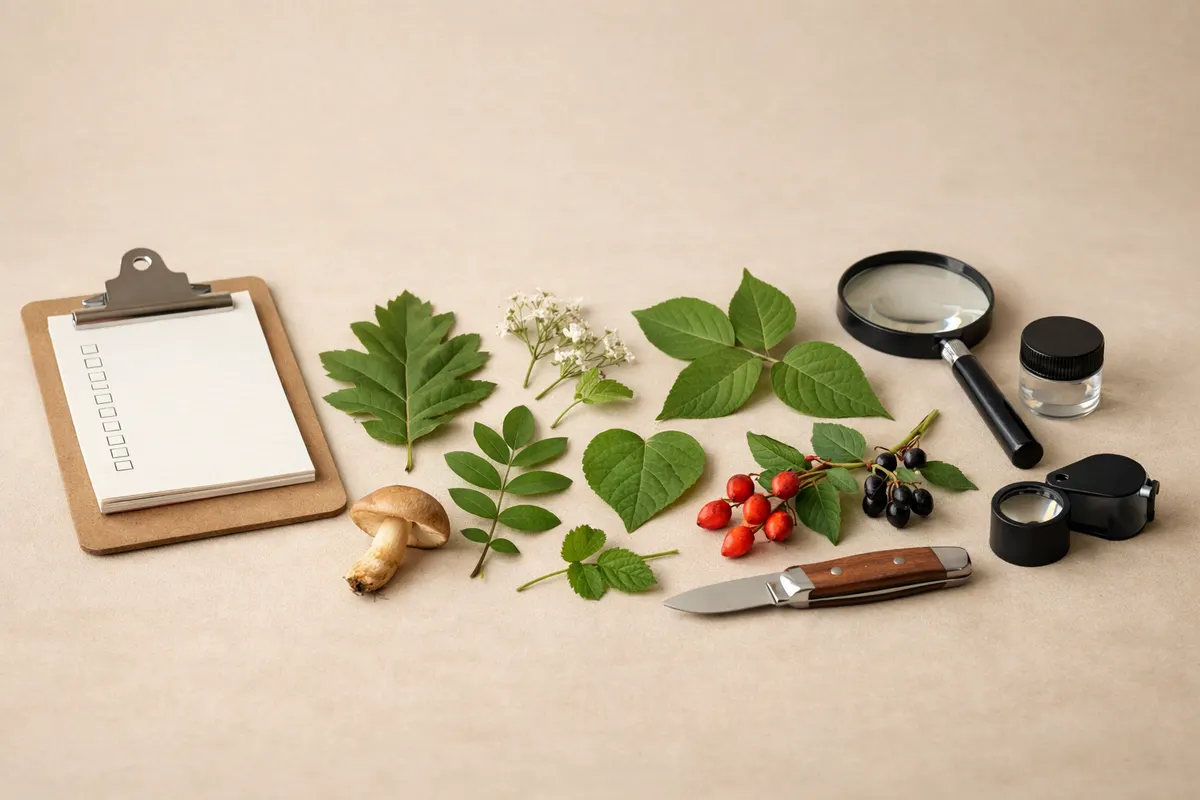
Quick answer for plant identification guide
A plant identification guide starts with a close look at visible clues—leaf shape, leaf arrangement, stem features, flowers or fruits, and habitat—and then uses a stepwise comparison to rule out common plant lookalikes. Treat one photo as an initial hypothesis, not a final verdict.
Begin by recording the strongest, unambiguous clues you can see in the photo and the location and time of year. Those pieces make identification practical: for example, knowing a leaf is opposite vs. alternate immediately narrows the candidate list.
If a confident match still isn’t possible from your photo, use the guide’s verification steps: get additional photos showing scale and reproductive parts, compare with trusted references, and, when appropriate, consult a local expert or lab rather than assuming safety or edibility.
What it means
Plant identification is the process of using observable traits to connect an unknown specimen to a name or description. In practice this means reading leaves, stems, flowers, and context as clues and comparing them to documented species accounts.
A practical plant identification guide focuses on traits you can check from photos or quick field notes. Instead of trying to memorize every species, it teaches a repeatable approach: find the most diagnostic features, rule out lookalikes, and escalate verification as needed.
Using this method prevents two common errors: false certainty (treating one unclear photo as definitive) and paralysis (giving up when the first image isn’t perfect). The goal is to produce a reasoned shortlist with clear next steps to raise confidence.
Key clues
Focus on the features that are visible from a photo and are most diagnostic for many plants. These clues let you narrow possibilities quickly before you chase finer details.
Context clues are equally important: habitat (wetland, lawn, forest edge), geographic region, and season often rule out many lookalikes that otherwise share leaf shapes.
Record photo quality details—scale (ruler or coin), focus on edges and vein patterns, and overall plant habit (shrub, vine, tree, herb). These make later comparisons with references much more reliable.
- Leaf shape and outline (lobed, pinnate, entire, serrated) — the broad silhouette narrows to families or genera.
- Leaf arrangement on the stem (alternate, opposite, whorled) — one of the fastest eliminators.
- Leaf margin and tip (serrated, smooth, mucronate) — edges and tips often distinguish species with otherwise similar leaves.
- Venation pattern (pinnate, palmate, parallel) — visible vein spacing and prominence can separate lookalikes.
- Surface texture and hair (glossy, hairy, glandular) — hairs, glands, or a waxy sheen are high-value clues.
- Presence and type of petiole (winged, sessile, sheathing) — how the leaf attaches matters for genera-level ID.
- Stem traits (color, ridges, lenticels, thorns) — stems can confirm or contradict a leaf-based hypothesis.
- Flowers, buds, or fruit (shape, color, arrangement) — reproductive parts are often required for confident IDs.
- Plant size and habit (prostrate, clumping, single trunk) — overall form reduces candidate lists quickly.
- Habitat and phenology (wet soil, shade, flowering season) — ecological context rules out unrelated species.
Step-by-step workflow
Use a repeatable workflow to turn a photo into a reasoned identification. Start wide, eliminate obvious mismatches, then zoom into diagnostic details and add context to increase confidence.
Doing these steps in order keeps you from chasing misleading single traits and helps you decide when to stop and verify externally.
- 1) Capture and catalog: Save the original photo and note date, time, and exact location (or as precise as you can). Add a quick note about where the plant grows (lawn, fence line, wetland, roadside).
- 2) Establish habit and scale: Can you tell whether it’s a tree, shrub, vine, or herb? Add a ruler, coin, or hand in a follow-up photo to record scale.
- 3) Check leaf arrangement and silhouette: Are leaves opposite or alternate? Are they simple or compound? This single observation often eliminates most lookalikes.
- 4) Examine margins, venation, and surface: Zoom or take a macro shot of the leaf edge and veins. Look for hairs, glands, or stomatal patches that are visible in good photos.
- 5) Inspect stems and attachments: Note thorns, ridges, color, or peeling bark. For herbs, check if leaves clasp the stem or have a distinct petiole.
- 6) Find reproductive parts: Flowers, buds, seed pods, or fruits are usually decisive. If absent, note the season and probability of flowering soon.
- 7) Compare with at least two trusted references: field guides, regional flora websites, or herbarium images. Don’t rely on a single source or a single automated match.
- 8) Decide confidence level: Label your result as high, medium, or low confidence. For medium/low results, list what additional photos or context you need.
- 9) Verify when necessary: If identification affects safety, legal compliance, or treatment decisions (e. g. , poisonous plants, regulated species), contact a local extension office, botanist, or plant clinic.
Examples
Example 1 — A common backyard leaf: You have a photo of a single green leaf with an alternate arrangement, serrated margin, and pinnate veins. These clues point away from maples (which have opposite leaves) and toward families like Rosaceae or Betulaceae. Add a close-up of the stem and any nearby buds to narrow further.
Example 2 — A lookalike warning: Two plants can share nearly identical leaves yet differ in flower structure. For instance, young horse chestnut (Aesculus) seedlings and some species of buckeye look similar at a glance, but their flower clusters and mature leaflets differ. Use reproductive parts or habit to separate them.
Example 3 — Habitat narrows the field: A serrated, lance-shaped leaf found in a marshy area is more likely a wetland sedge relative than a similar-looking upland shrub. Ecological context often removes dozens of candidates quickly.
For a concise printable reference you can carry in the field, see the Plant Identification Cheat Sheet: Visual Clues, Similar Lookalikes, and Safe Next Steps (https://leafidentification. app/blog/plant-identification-cheat-sheet).
Limitations
A single photo has important limits. Leaves can change with age, season, damage, or position on the plant; juveniles often look different from adults. That variability turns many single-image matches into tentative suggestions rather than definitive identifications.
Automated matches and casual visual comparisons are helpful first passes but can be misled by common lookalikes, hybrids, cultivated varieties, or regional variants. Never treat an automated label as proof of identity for decisions that affect health, legal compliance, or consumption.
When safety is a concern (poisonous plants, edible foraging, or contact dermatitis), stop at low or medium confidence. Seek confirmation from a local extension educator, botanical garden, or an experienced field botanist before acting on the identification.
Know when to escalate: if the plant is rare, protected, potentially toxic, or affects property or livestock, gather more images (flowers, fruits, whole-plant habit), notes on habitat, and, if necessary, collect a voucher specimen following local regulations for expert verification.
- Separate high-confidence, partial, and uncertain outcomes.
- Tell the reader when to verify with a trusted source or professional.
Related guides
Next step: use Leaf Identification: Leafzy as a first pass
After you check the visible clues above, use Leaf Identification: Leafzy on your phone to generate candidate matches and organize follow-up photos. Treat app results as research notes: collect more images and consult local experts for anything needing high confidence.

Frequently asked questions
How many photos do I need to identify a plant reliably?
Aim for at least three: a whole-plant shot for habit and scale, a close-up of a leaf edge and vein pattern, and a clear image of flowers or fruit when available. If you can’t get reproductive parts, add stem and attachment shots plus habitat notes to improve accuracy.
What are the fastest clues to rule out common lookalikes?
Start with leaf arrangement (opposite vs. alternate), leaf type (simple vs. compound), and overall habit (tree/shrub/herb). These three observations eliminate many candidates quickly and guide which details to collect next.
Can an app alone give a definitive identification?
Apps provide useful suggestions but should be treated as hypothesis generators. Use the app’s match as a starting point, then verify using additional photos, field guides, and, for critical cases, consultation with local experts.
When should I consult an expert or lab?
Consult an expert when the identification affects safety (possible poisoning), legal status (protected or invasive species), conservation work, or when your confidence is low despite additional photos. Experts can examine specimens or use microscopic or genetic tests if necessary.