
Oleander
By Dorian Wells
See why a photo of a woody shrub with pink flower clusters suggests oleander, which clues you can see, and which close-up would help check the result.
Identification summary
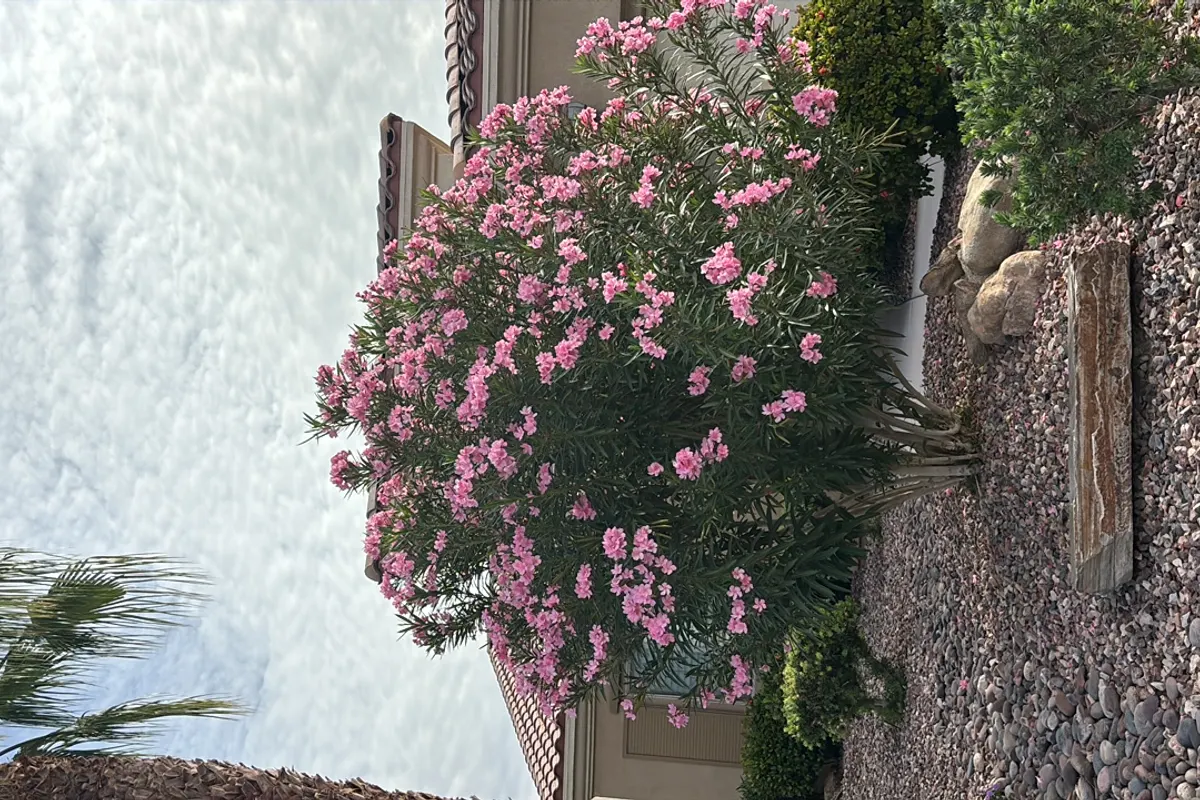
Leafzy returned Oleander for the shrub in this scan. The photo takes in the whole plant, from the exposed woody stems to the clusters of pink blooms at the tips of leafy branches.
The combination makes oleander a plausible identification. The angle is useful for seeing how the plant grows, but the flowers are too small in the frame to count their petals or distinguish a named cultivar.
Visible in the photo
| Growth habit | Several woody stems support a rounded shrub. |
|---|---|
| Flower placement | Pink blooms cluster near the ends of leafy branches. |
| Foliage | Long, narrow leaves are visible beside the flowers. |
Identification
| Result from Leafzy | Oleander. The cultivar is undetermined. |
|---|
Which clues point to oleander in this photo?
Start at the base of the plant. Several bare stems rise from the same small bed and branch into a dense crown. Follow one branch outward and the pink resolves into individual clusters with narrow green leaves beside them. Taken together, those details explain the app’s Oleander result better than the shade of pink alone.
The framing answers a question a flower close-up often leaves open: what kind of plant is carrying those blooms? Here the flowers belong to a woody shrub. Keeping the stems, leaves, and flower clusters in one frame also helps avoid a common mistake in planted borders: assigning a flower on one plant to the foliage of its neighbor.
Compare the leaves beside a flower cluster
For a second view, choose a flowering shoot near the outside of the crown. Frame the point where several leaves meet the stem, with a flower cluster still visible. The North Carolina Extension Gardener Plant Toolbox describes oleander leaves as narrow and attached opposite one another or in whorls. Seeing their attachment would add a clue the original photo only hints at.
Now compare flowers at the same stage of opening. A tight bunch of overlapping petals can look like one large flower from a distance. An image of one open bloom beside unopened buds helps separate the shape of each flower from the outline of the cluster.
- Keep the original wide shot for the shape of the shrub.
- Take a side view of one leafy shoot and a front view of one open flower.
- Use the same branch for both pictures so the features belong to the same specimen.
What this example leaves open
The scan names oleander, but there is no plant tag in the picture and no close view of a single flower. Pink is a useful description for finding this observation again. It is a poor basis for choosing a cultivar, particularly when sunlight and shade change the appearance of blooms across the same shrub.
If the question is the cultivar name, a nursery label or planting record would add more than another distant photograph. If the question is the plant itself, photograph the branch where it grows. Oleander is poisonous, and the details needed here can be recorded without picking a leaf or flower.
Related guides
Check a pink-flowered shrub with Leafzy
Photograph the whole shrub and one flowering shoot. Use Leafzy to get a suggested name, then compare the leaf shape and flower placement in your images with the candidate.
Take the next step →Frequently asked questions
Can pink flower identification work from a whole-shrub photo?
Yes, when the frame shows features that a single blossom cannot. In this case the stems establish the woody habit and the leaves sit alongside the flower clusters. The image supports a likely identification while leaving fine floral details unresolved.
Which clue matters most besides pink petals?
Look at the leaves on the shoot that carries the blooms. Here they are long and narrow. A clear view of where they attach to the stem would help check the match against a botanical description.
Can the scan tell me which pink oleander cultivar this is?
The app returned Oleander. The photograph supplies neither a cultivar label nor a detailed view of individual flowers. Keep the broader identification unless you have a reliable label or planting record for this shrub.
What should I photograph next?
Take a close shot of one open flower, then a side view showing the leaves attached below it. Keep the original wide shot with them so you can connect both details to the same shrub.