Flower Identification
Flower Identification: Visual Clues and Safe Next Steps
Learn which flower identification details a photo can prove, which it cannot, and the follow-up checks worth doing before you rely on the answer.
Flower identification starts with clear visual clues. A single well-lit photo often narrows a bloom to a small group of likely species by showing petal shape, color, and basic leaf arrangement.
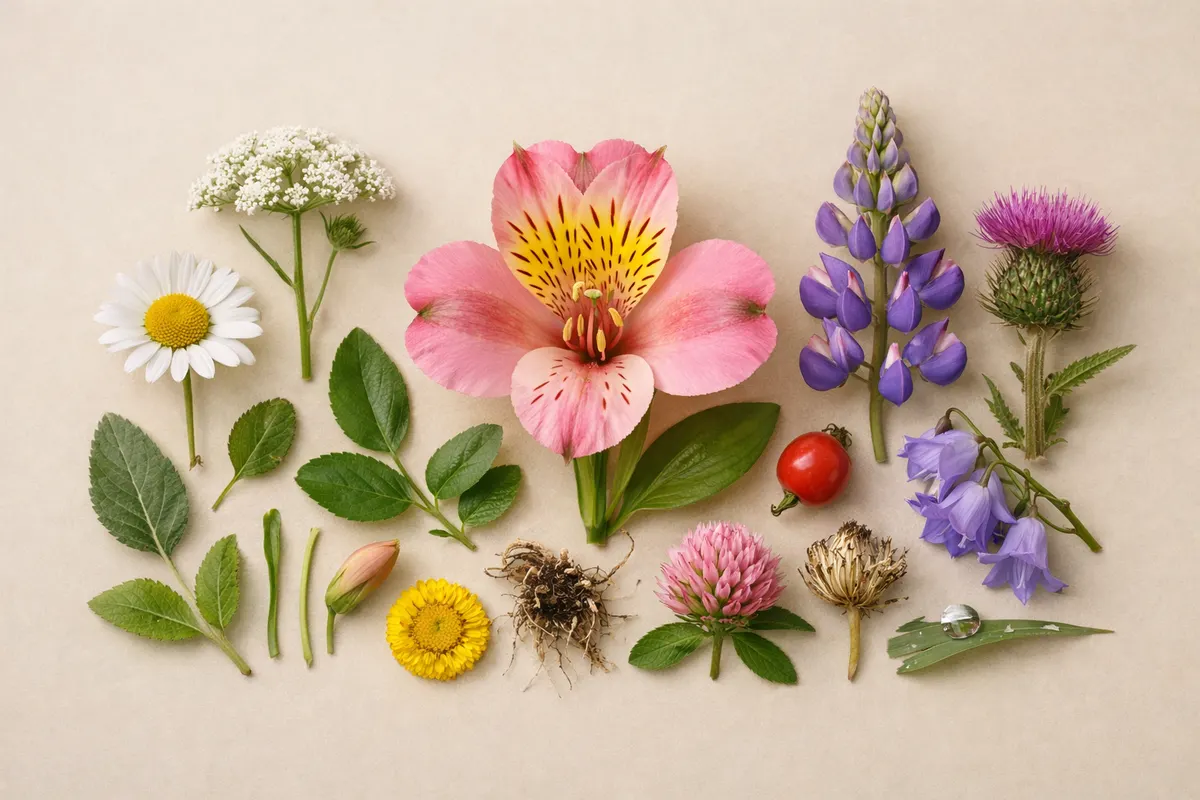
A photo-first approach is the fastest first pass because images capture details our eyes miss at a glance: petal count, symmetry, stamen arrangement, and how the flower attaches to the stem.
Use a photo to categorize the bloom (garden perennial, cultivated shrub, or wildflower) and to flag lookalikes for closer comparison; treat the result as a ranked hypothesis, not a final diagnosis.
As you compare photos, include nearby leaves, the stem habit, and any seedpods or bracts in the frame — those cues help separate similar species and improve confidence without needing lab tests.

How identification works
Step 1
Snap a photo
Take a clear, well-lit photo of your item in the Leaf Identification: Leafzy app.
Step 2
Get an instant identification
The app reads the visible clues and returns the closest matches in seconds.
Step 3
Review the details
Compare the result with your photo, review any uncertainty, and check the suggested next steps.
Key visual signals to check before identifying a flower
Before or alongside a photo ID, inspect 4–6 repeatable signals that are reliably visible: flower symmetry, petal count and shape, stamen and pistil layout, leaf arrangement, growth habit, and bloom placement on the stem.
Note how flowers group on the plant — single terminal blooms, clusters, umbels, or racemes look different and narrow candidates quickly. Habit (mound, vine, upright) often separates garden cultivars from wild species.
Petal texture and margin (entire, toothed, fringed) are durable clues in photos; glossiness or a fuzzy surface on petals and leaves can be decisive when two species share color.
- Look for radial vs bilateral symmetry: many legumes and orchids are bilaterally symmetrical while roses and daisies are radial.
- Count petals and lobes — a repeated 5-petal pattern strongly suggests certain families, while composite heads (many tiny florets) indicate Asteraceae.
- For white flower identification, check stamen color and nectar guides against green leaf contrast; pale petals can hide unique center markings you’ll want in frame.
- Observe leaf position and surface: alternate vs opposite leaves and glossy vs hairy textures cut down lookalikes dramatically.
What a pink flower identification result includes
A practical flower identification result returns a short, evidence-based profile: likely family and candidate species ranked by confidence, key visual matches (petal number, leaf type), and the image features that drove the match.
Expect called-out distinguishing details such as bloom color range, typical bloom season, leaf attachment and surface texture, and growth habit notes that explain the match — for example, “upright clumping perennial with opposite serrated leaves.”
The result also lists nearby lookalikes and the specific photo clues that separate them, so you can take a second photo focused on the deciding feature (stamens, seed capsule, or leaf base).
For broader context, the result may link to concise external resources like the Plant Identification Cheat Sheet: Visual Clues, Similar Lookalikes, and Safe Next Steps or the Plant Visual Checklist: Common Clues, Lookalikes, and Next Steps for comparison guidance.
- Candidate species (ranked) and a confidence indicator tied to visible features
- Key visual match points: petal shape, stamen arrangement, leaf attachment, and habit
- Short list of common lookalikes and which photo angles resolve them
- Practical next checks: additional photos to take and non-visual checks to avoid misidentifying
Common lookalikes and the tell-tale photo clues
Many garden and wild blooms are mistaken for one another. For example, wild Phlox and garden Phlox share color but differ in corolla shape and leaf width — a close-up of the corolla tube usually separates them.
Roses and some wild multiflora shrubs can be confused at a distance; count the petal whorls and check for hips or thorns near the base of the bloom in your photo to tell roses apart.
Another frequent confusion is between dogwood flowers (clustered bracts) and certain ornamental trees with showy bracts; include the entire inflorescence in the frame so bracts and actual flowers are visible.
If you’re unsure whether a bloom is a cultivated cultivar or a wild species, photos of the entire plant habit plus a leaf close-up typically provide enough distinguishing evidence for a useful first-pass identification.
- Peony vs double-flowered roses: look for the central stamens (visible in peonies) versus a tightly packed petal mass in some rose varieties
- Lilac vs mock orange: both have clusters of small flowers, but lilacs have opposite leaves and a distinct fragrance — include nearby leaves in the photo
- Daisy-like composites (oxeye, chamomile, shasta): zoom into the disk florets to check seedhead structure
- Honeysuckle vs trumpet vine: check leaf arrangement and whether flowers are borne in pairs or clusters
Frequently asked questions
How should I approach spring wildflower identification when I'm on a hike?
Start with clear photos of the flower from multiple angles plus one showing nearby leaves and the plant’s overall habit. Note location and habitat (meadow, roadside, woodland), then use those images to narrow candidates; the habitat often rules out garden cultivars. Treat the app’s suggestions as probable matches, and if the plant could be dangerous or used medicinally, seek expert verification rather than relying on a single photo.
What photo details matter most for accurate flower identification?
Prioritize a close-up of the flower center (stamens/pistil), a clear view of at least one leaf and its attachment to the stem, and an image of the whole plant or branch to show habit. Good lighting and scale (include a coin or ruler) help, and multiple angles reduce ambiguity between lookalikes.
Can a single photo prove a flower’s identity definitively?
No. A single photo can often narrow possibilities and give a high-confidence candidate, but it rarely proves identity beyond doubt. Some species require seed, scent, or microscopic details for confirmation. Use the photo result as a prioritized hypothesis and collect additional images or observations for verification.
When should I try white flower identification in the field versus waiting for a photo review?
If the bloom is pale, take extra photos that include contrasting background and a leaf close-up to capture center markings and stamens that can be lost in glare. If you must decide quickly (e.g., to avoid contact with a suspected irritant), prioritize safety and avoid handling until you can review images or consult an expert.
Related guides
Try Leaf Identification: Leafzy after narrowing the category
Use Leaf Identification: Leafzy as a fast first pass once you’ve captured the visible clues described here. Take a clear close-up of the bloom center, a leaf shot, and a habit photo, then scan those images in the app to get ranked candidate matches and the specific photo features that supported each suggestion. The app is intended as an evidence-guided starting point — follow up with targeted photos or expert resources when stakes are high. Visit https://leafidentification.app/ to get started.