Leaf Identification
Poison Oak: Identification, Habitat, and Real Examples
Photo-driven tips to recognize poison oak in the field, compare common lookalikes, and take safer follow-up steps before trusting one image.
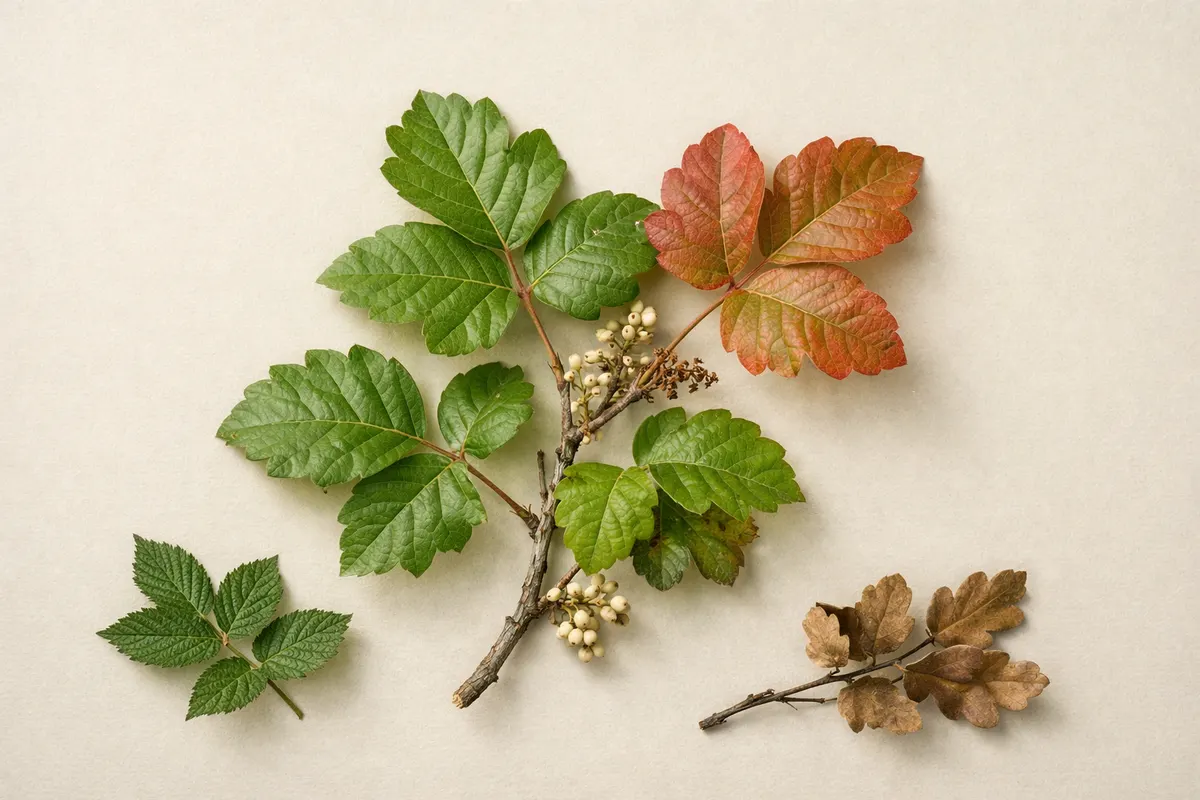
What poison oak is and where it fits in the plant family
Poison oak is a common name for a small group of shrubs and vines in the Toxicodendron genus known for producing urushiol, the oil that causes contact dermatitis in many people. The group includes western forms (often called western poison oak) and eastern/southern forms; they vary in growth habit from low, shrub-like plants to climbing vines that can reach several meters.
Typical mature plants range from about 0.3 to 3 meters tall, though vines can climb higher when they reach trees or structures. Leaves are compound, usually with three leaflets, and plants produce small yellowish-green flowers followed by whitish or tan berries that birds eat. The presence of urushiol, not size or color alone, is what makes these plants a health concern.
Field context matters: the same species will look different in coastal fog, dry chaparral, and shaded woodland. Use clear photos of leaflet shape, the stem where leaflets attach, and nearby habitat clues to make a confident visual call. For help understanding leaflet margins and arrangements that matter for identification, see Leaf Shape Identification: Veins, Margins, and Arrangement Clues.
- Genus: Toxicodendron (produces urushiol oil).
- Growth forms: shrub or climbing vine; 0.3–3+ m depending on site.
- Leaves: compound with three leaflets most commonly.
- Flowers/fruit: small yellow-green flowers; pale berries in late season.
How can you tell a plant is poison oak from photos?
Photographs can show many reliable clues: the number of leaflets, the leaflet shape (lobed vs. smooth), leaflet margin teeth, the way leaflets attach to the petiole, and any vine stems with aerial rootlets. Start by photographing a clean, flattened leaflet set on a neutral background so the edges and vein pattern are visible.
Look for the typical 'three-leaflet' arrangement where a single petiole bears three separate leaflets; the middle leaflet often has a longer stalk than the two side leaflets. Lobed or rounded lobes are common in some regional varieties, while others have smoother, undulating margins. Color changes across seasons—bright red new growth, green in summer, and orange-red fall color—are useful supporting evidence but not definitive on their own.
Photographs that include habitat context—soil type, neighboring species, and whether the stem is woody or herbaceous—help reduce false positives. If you have only a single photo of a distant plant or blurry leaves, avoid a firm identification and mark the image as 'possible' until you can get closer or compare details.
- Count leaflets: look for groups of three; confirm all three attach to one petiole.
- Examine leaflet edges: lobed, scalloped, or smooth margins are region-dependent.
- Check veins: a prominent midrib with visible lateral veins helps in comparisons.
- Capture stem and petiole: the stalk shape and any hairs or rootlets are discriminating clues.
Key identification facts and photo clues
The table below condenses the most consistent, photographable attributes for poison oak alongside what to look for in a field image. Use it as a quick checklist when you review or capture photos, and note that seasonal color and growth habit will vary by region.
A single cell of one photo rarely proves a species-level ID; instead, combine leaflet detail, stem attachment, and habitat notes to increase confidence.
| Attribute | Typical appearance | Photo clue to capture |
|---|---|---|
| Leaf arrangement | Compound leaves, commonly three leaflets | Photo of whole leaf on petiole showing all three leaflets |
| Leaflet shape | Variable: lobed, scalloped, or smooth; middle leaflet often larger | Close-up showing margin outline and lobe pattern |
| Size | Leaflets typically 2–10 cm long depending on age | Include scale (coin, ruler) or common object for reference |
| Stem and habit | Shrub or vine; vines may have aerial rootlets | Shot including stem base or vine attachment to substrate |
| Seasonal color | Spring red/gold new growth, green summer, red/brown fall | Photos across seasons if available; single-season shots noted |
- Use a ruler or known object in your photo to show leaflet length when possible.
- Take both close-ups and wider context shots: one for shape, one for habitat.
- Record the date and location—seasonal color is a strong supporting clue.
Where and when you’re most likely to find poison oak
Poison oak grows across a wide range of North America but appears most commonly in western coastal regions as a vine or shrub and in parts of the southeastern United States as low shrubs. It favors edges—forest margins, chaparral, riparian corridors, disturbed ground, and fences—where sunlight and shelter meet.
Seasonality matters for appearance: leaves may be absent or reduced in late winter in colder or drier areas, while new spring growth and flowering occur in late spring to early summer. Birds eat the berries in late summer to fall, which can spread seeds to new sites.
When you plan field photos, aim for early morning or late afternoon light to reduce glare on shiny leaf surfaces and to capture color gradations that help separate poison oak from lookalikes.
| Region / habitat | When you'll see it | What you'll notice |
|---|---|---|
| Pacific coastal forests & chaparral | Spring–fall (new growth and berries visible) | Vines climbing trees or low shrub mats; lobed leaflets common |
| Southeastern U.S. pine/oak woods | Spring–summer foliage; berries in late summer | Low, shrubby habit with three leaflets and rounded lobes |
| Riparian zones and fence lines | Year-round where evergreen or milder climates exist | Tangled growth, frequent contact with human paths |
| Disturbed lots and roadsides | Spring regrowth after disturbance | Patchy stands, young red shoots, and variable leaflet shapes |
- Frequent settings: woodland edges, coastal scrub, creek banks, roadsides, and urban wild patches.
- Activity window: new leaves in spring, flowers in late spring–summer, berries in late summer–fall.
- Visibility tip: in dense shade the leaf color and lobing may be muted—photograph margins and vein pattern.
Plants commonly mistaken for poison oak and how to tell them apart
Several harmless plants share superficial similarities with poison oak, which is why identification from photos benefits from multiple corroborating clues. Below are the most frequent lookalikes and the simple photo details that help separate them.
Always compare leaf count, leaflet attachment, margin shape, and the stem. If key features are obscured—rot, insect damage, or partial leaves—label the image as uncertain and seek additional angles.
- poison oak vs poison ivy — key photo differences include growth habit (poison ivy often climbs with hairy rootlets on vines but can be a shrub) and regional leaflet shape; photograph the petiole and whole leaf to compare.
- Virginia creeper: compound leaves with five or more leaflets (count them in your photo).
- Boxelder / young maple: opposite leaf attachment and palmate or pinnate arrangements rather than the alternating three-leaflet pattern.
- Certain wild rose seedlings or blackberry shoots: thorns and serrated margins on stems are a clear tell — include stem close-ups to rule these out.
Care and handling
Treat any plant you suspect is poison oak with caution. If you believe you touched poison oak, wash the exposed skin and any clothing or gear that contacted the plant as soon as practical with soap and water. Herbal remedies and over-the-counter washes can reduce spread of urushiol when applied promptly, but they do not guarantee prevention of a reaction.
Do not attempt to ‘burn away’ the plant or remove sap with solvents; those actions can increase exposure and inhalation risk. If you have a severe reaction—widespread blistering, facial swelling, difficulty breathing, or fever—seek medical attention immediately.
When handling live plants for removal, wear impermeable gloves, long sleeves, and eye protection. Remember that pets can carry urushiol on fur; wash animals with pet-safe cleaners after suspected contact and avoid close contact until they’re cleaned.
- First aid: wash skin and clothing promptly with soap and water to remove oil.
- Avoid: burning plants, using solvents that can spread or aerosolize urushiol.
- Protective gear: gloves, long sleeves, and eye protection for any planned handling.
- Medical: seek professional care for severe or spreading rashes, facial exposure, or breathing issues.
Frequently asked questions
What does poison oak look like when I'm photographing a leaf up close?
When photographing a leaf up close, poison oak usually shows a compound leaf composed of three distinct leaflets attached to one petiole, with a visible midrib and lateral veins. Capture the leaflet margins (lobed, scalloped, or smooth), the junction where the leaflets meet the petiole, and any hair or rootlet detail on nearby stems. Include a scale object so you can judge leaflet size—close-ups that blur the petiole or edge shape are the most common cause of mistaken IDs.
How should I photograph a suspected poison oak vine to avoid misidentifying it?
Photograph the vine at several scales: a wide shot showing the plant's habit (low shrub vs. climbing vine), a mid-range shot of a full leaf set on the petiole, and a close-up of the leaflet margin and stem attachment. If the vine has aerial rootlets or hairy-looking adhesive pads, include a clear image of that section. Good lighting that avoids blown highlights on glossy leaves preserves color and margin detail useful for comparison.
Can I rely on one photo to tell poison oak from other three-leaflet plants?
No — a single photo can suggest poison oak but rarely proves it. Use multiple images showing the full leaf, margin detail, stem attachment, and habitat. If identification matters for safety, treat any single-photo match as preliminary and take additional pictures or consult local plant resources. The Leaf Identification: Leafzy app can help you compare your photos against the clues on this page as an initial step, but app results should be treated as a first pass rather than definitive.
When should I seek medical help after touching poison oak?
Seek medical attention if you experience severe reactions such as swelling of the face or throat, difficulty breathing, widespread painful blisters, or if the rash affects the eyes or genitals. For localized rashes, over-the-counter topical corticosteroids and anti-itch treatments can help; if a reaction worsens or spreads despite home care, contact a healthcare professional for assessment and possible prescription treatments.
Related guides
Compare your photo against these poison oak clues
Use Leaf Identification: Leafzy on your phone to compare your picture with the visual clues on this page. Treat the app’s match as an informed first pass—document leaflet count, margin shape, and stem details in additional shots, and follow the safety steps above rather than relying on a single image.