Plant Identification Cheat Sheet: Visual Clues, Similar Lookalikes, and Safe Next Steps
Use this plant identification cheat sheet to compare leaf shape, margin, venation, flowers and habitat, spot lookalikes, and decide safe verification steps.
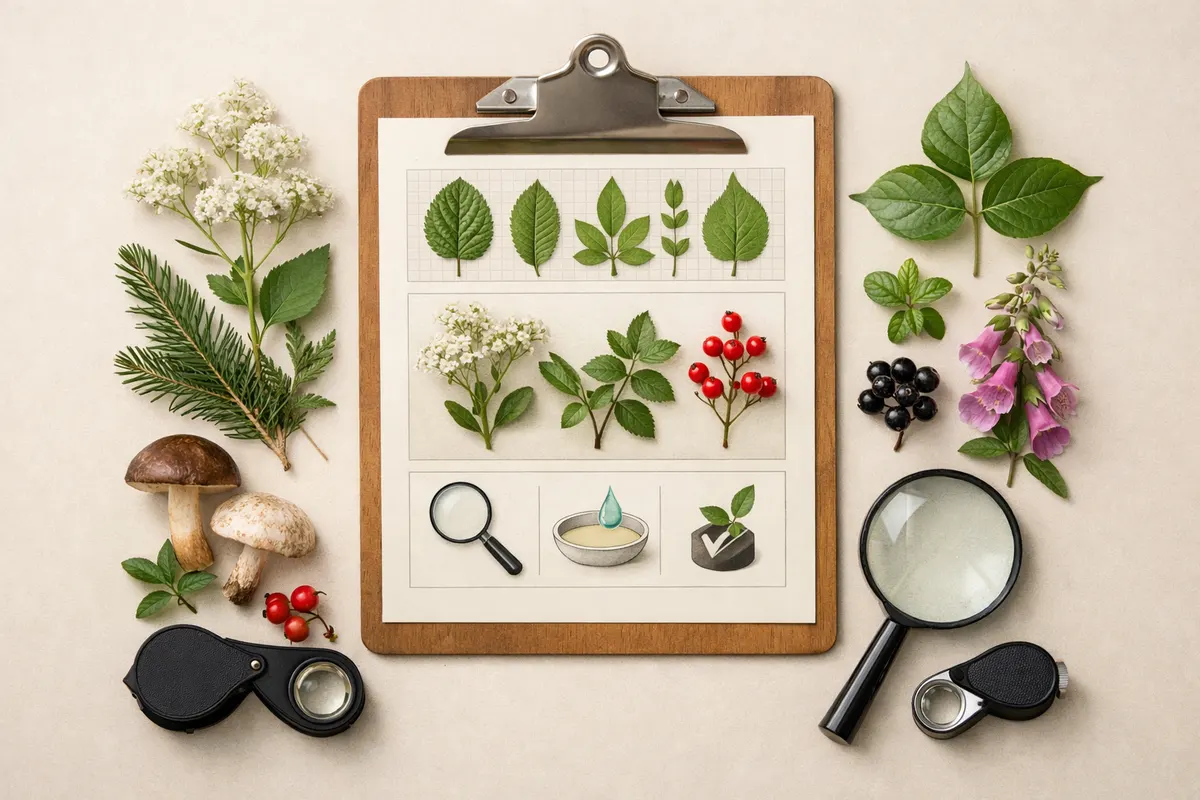
Quick answer for plant identification cheat sheet
A plant identification cheat sheet gives you the fastest visible clues to decide what a plant likely is and when to keep investigating. Start with leaf shape, margin, venation, and arrangement; add stem texture, flowers or fruit (if present), habitat, and size for context.
If you only have one photo, treat the result as a probable match rather than a certificate of identity. Use the checklist below to boost confidence: note 3–5 consistent clues, compare to known lookalikes, and follow safe next steps like taking additional photos or consulting a local reference.
This guide focuses on practical checks you can perform in the field or from photos, common plant cheat lookalikes to avoid, and a step-by-step workflow to turn visual clues into reliable identifications.
- Primary quick checks: leaf shape, margin, venation, arrangement, and scale.
- Add context: flowers, fruit, bark or stem, habitat, and size.
- Never over-rely on a single photo—verify uncertain matches before acting on them.
What it means
A plant identification cheat sheet is a compact checklist of the most diagnostic, easy-to-see features that separate one plant from another. Rather than exhaustive taxonomy, it prioritizes traits you can confirm quickly from a photo or short field inspection.
The idea is practical: use a handful of high-value clues that reduce the number of candidate species. For example, knowing whether leaves are opposite or alternate often halves the possible family list; seeing a compound leaf rules out many single-leaf genera.
This approach suits gardeners, hikers, educators, or anyone who needs a useful, evidence-based guess. It does not replace herbarium work, genetic testing, or expert appraisal—those are follow-ups when identification has safety, legal, or economic consequences.
- Focus on clues visible without dissection: leaf and stem traits, flowers/fruit, and habitat.
- Use context—season, location, soil type—to prioritize likely species.
- Treat single-photo IDs as provisional; gather more evidence for high-stakes decisions.
Key clues
Leaf shape: note whether leaves are simple (one blade) or compound (multiple leaflets). Record broad categories—ovate, lanceolate, cordate (heart-shaped), palmate—or whether they are needlelike. Shape quickly trims many possibilities.
Leaf margin: look for entire (smooth), serrated, toothed, lobed, or revolute margins. Margins are often stable within a species and are easy to photograph at close range.
Venation pattern: parallel, pinnate (one main midrib with side veins), or palmate (veins radiating from a single point). Venation is extremely helpful: monocots (like grasses and lilies) typically show parallel veins, while dicots usually show pinnate or palmate patterns.
- Leaf arrangement: alternate, opposite, or whorled—photograph the stem to capture this clue.
- Leaf base and tip: tapered, rounded, heart-shaped base, or acuminate tip can separate lookalikes.
- Surface texture and hairs: glossy, waxy, fuzzy, or scaly surfaces often point to different genera.
- Stipules, petiole length, and presence of a pulvinus: small details that matter for tricky IDs.
- Flowers and fruit: color, symmetry (radial vs. bilateral), number of petals, and fruit type (capsule, berry, samara) provide decisive evidence when available.
- Stem and bark: woody vs. herbaceous, lenticels, peeling bark, or thorns add context for trees and shrubs.
- Habitat and phenology: upland, wetland, mowing regime, and flowering time limit likely species in a region.
Step-by-step workflow
1) Take good photos and notes. Get a sharp close-up of a single leaf (both sides if possible), a photo of the stem showing leaf arrangement, and an image of the whole plant to show habit and size. Add a ruler or coin for scale and note location and date.
2) Run the cheat-sheet checklist. Determine leaf type (simple/compound), arrangement (alternate/opposite/whorled), margin, venation, and any distinctive surface features. Cross-check with habitat and season—some plants only flower or fruit at particular times.
3) Narrow to a candidate list. Use the most diagnostic trait first (for example, opposite leaves narrows to certain families like Oleaceae and Lamiaceae). Eliminate species that conflict with multiple observations instead of matching one or two points.
- 4) Compare to known lookalikes: list the top 2–3 commonly confused species and check for the single clue that reliably separates them (e. g. , stipule presence, hair pattern, or fruit type).
- 5) Seek targeted verification: if a match matters (toxicity, treatment, regulatory), photograph flowers/fruit or collect a sample (follow local rules) and consult a regional flora, extension service, or an expert.
- 6) Log uncertainty and next steps: mark the ID as high-confidence, tentative, or unknown and record what evidence would change that assessment.
Examples
Example 1 — Garden rose vs. multiflora rose: Both have pinnate leaves and thorny stems. The cheat-sheet pivot is the inflorescence: multiflora rose has many small flowers in clusters and distinctive hip shape; cultivated roses usually have larger solitary blooms and bred forms. Check bloom arrangement and hip shape to distinguish them.
Example 2 — Boxelder (Acer negundo) vs. sumac (Rhus spp. ): Both can show pinnate or irregularly compound leaves in photos. Boxelder has opposite leaf arrangement (a key maple trait) while sumac has alternate leaves. Photograph the stem where leaves attach to capture arrangement and avoid misidentifying.
Example 3 — Trout lily vs. yellow spring ephemeral lookalikes: Trout lilies have a single basal leaf pair and a distinctive mottled pattern; lookalikes may share color but differ in leaf arrangement and flower form. Document whether leaves arise from a basal rosette and whether a single flower emerges on a stalk.
- When flowers are absent, rely on leaf arrangement and stem attributes—those are often decisive.
- For vines, note tendril presence, leaf shape variability along the stem, and attachment method (adhesive, twining, or clasping).
- In wetland zones, check for aerenchyma (spongy tissue), hollow stems, or specialized fruit—habitat-specific traits are strong clues.
Limitations
One photo often lacks the full set of traits needed for a definitive identification. Seasonal absence of flowers or fruit, juvenile foliage that differs from adult leaves, and natural variation within species all reduce certainty. Treat single-image IDs as provisional unless multiple independent clues align.
Some plant groups are notoriously difficult to ID from photos alone—grasses, sedges, rushes, many composites (Asteraceae), and cryptic species complexes where microscopic or genetic analysis is required. Do not rely on a single visual match for safety-critical decisions (edibility, toxicity, legal control).
When a plant might pose a health or legal risk, escalate verification: collect additional photographic evidence from multiple angles, consult regional keys or extension services, or reach out to a trained botanist. Record your sources and be transparent about uncertainty when sharing identifications.
- High-confidence outcome: multiple diagnostic traits align (leaf arrangement, venation, flower form).
- Partial confidence: some clues match but key features (flowers/fruit) are missing—mark as tentative.
- Uncertain: conflicting traits or poor image quality—do not act on identification alone; gather more evidence or consult an expert.
Related guides
Try Leaf Identification: Leafzy after you collect visual clues
Once you’ve recorded the cheat-sheet clues—leaf arrangement, margins, venation, and habitat—use Leaf Identification: Leafzy on your device to compare photos and keep a record of tentative matches. Treat the app as a first-pass tool: verify high-stakes IDs with additional photos, local guides, or experts before acting.

Frequently asked questions
What are the three most important clues to check first?
Start with leaf arrangement (alternate, opposite, whorled), leaf type (simple or compound) and margin (entire, serrated, lobed). These traits are easy to see and quickly narrow candidate groups.
Can I identify plants from a single phone photo?
You can often make a provisional ID from one phone photo, but certainty is limited. A single image is best used to suggest candidates; add photos of flowers, fruit, and the stem, or consult local references for confirmation.
How do I avoid confusing lookalikes?
List the most common lookalikes, then test for a single decisive trait that separates them—opposite vs. alternate leaves, stipule presence, flower structure, or fruit type. Focused comparison prevents over-reliance on superficial similarities.
When should I seek expert verification?
Get verification when the identification affects safety, property, or legal matters—poisonous plants, regulated invasives, or plants intended for consumption. Also consult experts for cryptic groups or when regional species lists are complex.