Poisonous Plant Identification
Poisonous Plant Identification: Visual Clues & Next Steps
Learn which poisonous plant identification details a photo can prove, which it cannot, and the follow-up checks worth doing before you rely on the answer.
Poisonous plant identification helps you narrow a plant to a short list of likely species using only what you can see: leaf shape, leaflet count, arrangement, growth habit, and nearby context. A clear photo taken from multiple angles gives a fast first pass that often separates high-risk groups (like poison ivy or oleander) from harmless lookalikes.
A photo-first check is valuable because many immediate safety choices—keeping pets away, avoiding contact, or deciding whether to call a landscaper—depend on whether the plant looks like a known toxic group. The goal here is not absolute proof but a prioritized, evidence-based next step when you need to act quickly.
This category focuses on visual signals you can confirm before touching a plant and on what a Leaf Identification: Leafzy result typically reports back. The guidance avoids risky handling, explains common uncertainties, and points to follow-up checks that reduce false alarms.
If you need more context after the fast visual pass, the app and linked resources can suggest likely matches and the evidence they used, helping you choose safe, practical next steps rather than relying on guesswork.

How identification works
Step 1
Snap a photo
Take a clear, well-lit photo of your item in the Leaf Identification: Leafzy app.
Step 2
Get an instant identification
The app reads the visible clues and returns the closest matches in seconds.
Step 3
Review the details
Compare the result with your photo, review any uncertainty, and check the suggested next steps.
Key visual signals for poisonous plant identification
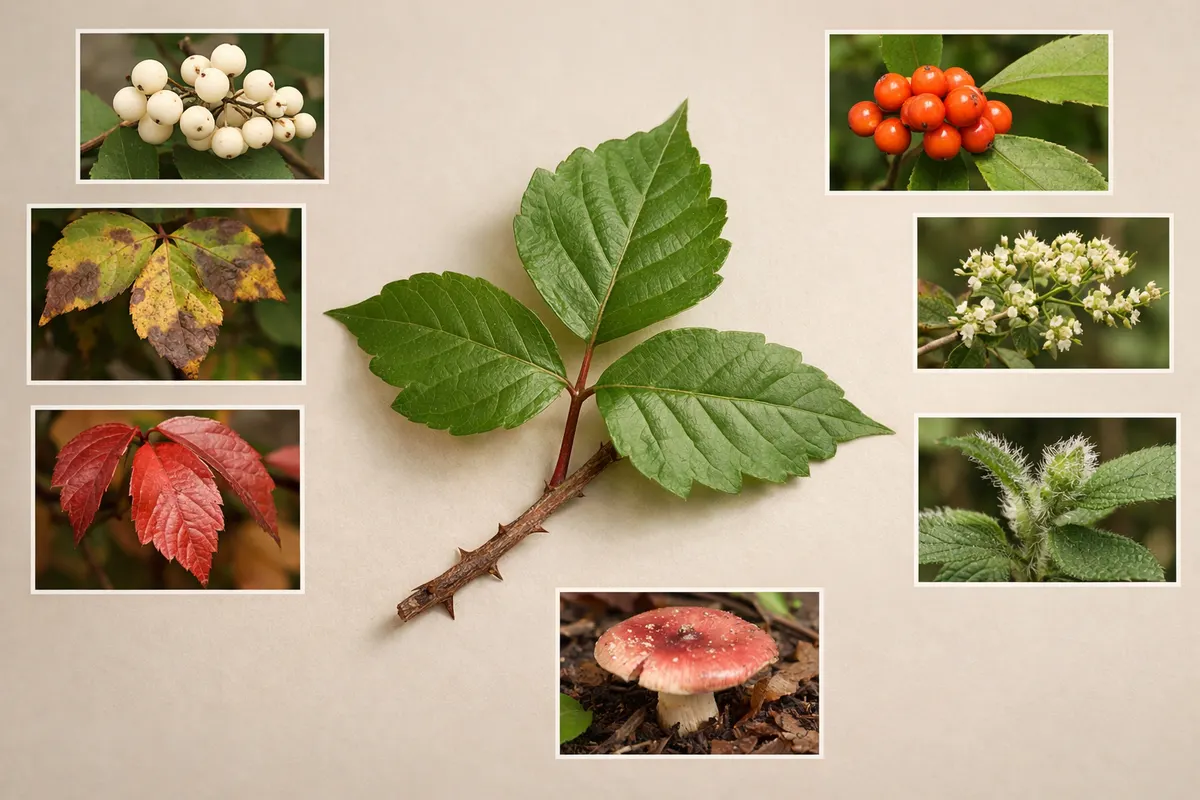
Start with the leaf arrangement and leaflet count: many common toxic plants show distinctive patterns. For example, poison ivy typically has compound leaves composed of three leaflets; species like oleander have narrow, lance-shaped leaves in clusters that are a different diagnostic pattern.
Next check margin and surface details. Smooth, toothed, lobed, or glossy surfaces are immediate clues: a shiny, hairless surface plus alternate leaf arrangement is a different signal than opposite leaves with serrated edges. Note any distinctive marks—red stems, white berries, or sap stains—because those features often separate toxic species from lookalikes.
Context matters: growth habit (vine vs. shrub vs. tree), fruit or flower color, and where the plant is growing (wetland, roadside, shaded woodlot) change how common certain poisonous plants are. Photograph a close-up of the leaf face, the stem where the leaf attaches, and a wider shot showing the plant habit to capture these clues.
Avoid direct contact while collecting photos. Use long lenses or phone zoom, wear gloves, and keep pets and children back. The visual pass aims to reduce uncertainty for safer handling decisions, not to confirm toxicity with absolute certainty.
- Leaf arrangement: alternate, opposite, or whorled and whether leaves are simple or compound.
- Leaf count: number of leaflets on a compound leaf (three is a critical count to check).
- Surface and margin: glossy vs. hairy, toothed vs. smooth, presence of hairs or glands.
- Stem and sap: color, hairiness, and whether damage produces a colored sap.
- Growth habit and context: vine, shrub, tree; nearby soil or moisture that favors certain species.
- Look for animals or children nearby and keep them away until you narrow the risk—plants poisonous to dogs are often in yards and path edges.
What a poisonous plant identification result includes
A typical result provides a short list of likely species or groups, each with the visual evidence used—leaf photos, key matching features, and a confidence estimate that states which clues were decisive and which remain ambiguous. Results never claim professional verification from a single image; they present evidence and uncertainty so you can make a safer decision.
Reports highlight practical fields: likely plant name(s), the visual traits matched (for example: ‘compound leaves, three leaflets, alternate arrangement’), and immediate risk notes such as contact risk or common toxic targets like skin irritation or cardiac toxins. When relevant, the output flags whether a plant is in groups commonly implicated in pet or child poisonings.
The result page links to nearby example cases and additional learning resources so you can compare your photos with curated examples. For more on general visual checks and next steps, see the Plant Identification Guide: Visual Clues, Similar Lookalikes, and Safe Next Steps (https://leafidentification.app/blog/plant-identification-guide).
Use the result to choose the right next action: restrict access, remove the plant with professional help, or monitor from a safe distance. The identification aims to reduce risk and guide sensible follow-up rather than to guarantee a definitive diagnosis from one picture.
Plants toxic to cats: common yard species and lookalikes
Several toxic species show up in yards and gardens and are often mistaken for harmless plants. For example, lily species are highly toxic to cats but can be misread when only leaflets are visible without the flowers. A clear image of the leaf base and any flower buds helps rule lilies in or out.
Other common confusions include oleander (highly toxic to people and pets) versus narrower, non-toxic ornamentals; and nightshade berries versus decorative fruits that are edible. The visual signals—arrangement of leaves, presence of milky sap, and flower shape—are the quickest reliable separators in photos.
If you suspect exposure, call a veterinarian or poison control rather than relying solely on a visual match. Use the identification result to tell them what features you saw and to decide whether immediate medical evaluation is needed.
- Lily leaves vs. similar monocots: check for strap-shaped leaves and flowering stalks.
- Oleander vs. similar evergreen shrubs: note opposite leaves and milky sap when safe to observe.
- Nightshade vs. ornamental berries: photograph fruit close-ups and leaf texture.
- If a pet may have ingested plant material, keep the plant sample and call your veterinarian promptly.
Frequently asked questions
What does poison ivy look like when it's climbing a fence?
Poison ivy climbing a fence typically shows compound leaves of three glossy leaflets with variable margins—smooth, scalloped, or slightly toothed—and frequently reddish stems or petiole when new. When it climbs, look for aerial rootlets or a vine-like stem and clusters of small greenish flowers or white berry-like drupes in season. A photo that includes the vine attachment, the leaf undersides, and the overall habit helps separate poison ivy from non-toxic vines.
How to identify poison ivy on young saplings or regrowth?
To identify poison ivy on young regrowth, check for the hallmark three-leaflet pattern where the middle leaflet has a longer stalk than the two side leaflets and leaves alternate along the stem. Young plants can show red-tinted new leaves and may be low to the ground; look for the same leaflet shape repeated along a vine or stem. Photograph the full stem, close-ups of the leaflet attachments, and any fruit or flower clusters to reduce uncertainty.
Is this plant dangerous for indoor pets like cats and how to check quickly?
If you worry a houseplant or yard plant is hazardous to indoor pets, use the visual result to check for known toxic groups (for example lilies for cats). Photograph the leaves, stems, and any flowers or fruit from a safe distance, then compare the result's matched traits to the plant in your home. If ingestion is suspected, keep a sample, contact your veterinarian, and provide the matched visual features from the identification to speed their assessment.
What immediate signs indicate a plant may be poisonous to dogs in a backyard?
Immediate visual signs that suggest a backyard plant may be poisonous to dogs include milky sap, clusters of bright berries, or distinctive seed pods, plus leaf patterns that match commonly toxic species. Note whether the plant is a shrub with opposite leaves, a vine with compound leaves, or a tree with familiar toxic seedpods. Use the photo identification to list the likely matches, then decide whether to restrict access and consult a vet if ingestion occurred.
Related guides
Narrow the match with Leaf Identification: Leafzy
After checking the visible clues above, use Leaf Identification: Leafzy to get a prioritized list of likely matches and the exact visual evidence behind each suggestion. The app is a fast first pass to reduce uncertainty—capture multiple angles (leaf face, attachment, habit) and then visit https://leafidentification.app/tools/what-tree-is-this to start a photo-based identification. Remember: results show evidence and uncertainty; for exposures or severe symptoms, contact medical or veterinary professionals immediately.