Leaf Identification
Peace Lily: Identification, Habitat, and Real Examples
Identify a peace lily from photos with leaf, spathe and growth clues, lookalike checks, care guidance, and where you are most likely to encounter one.
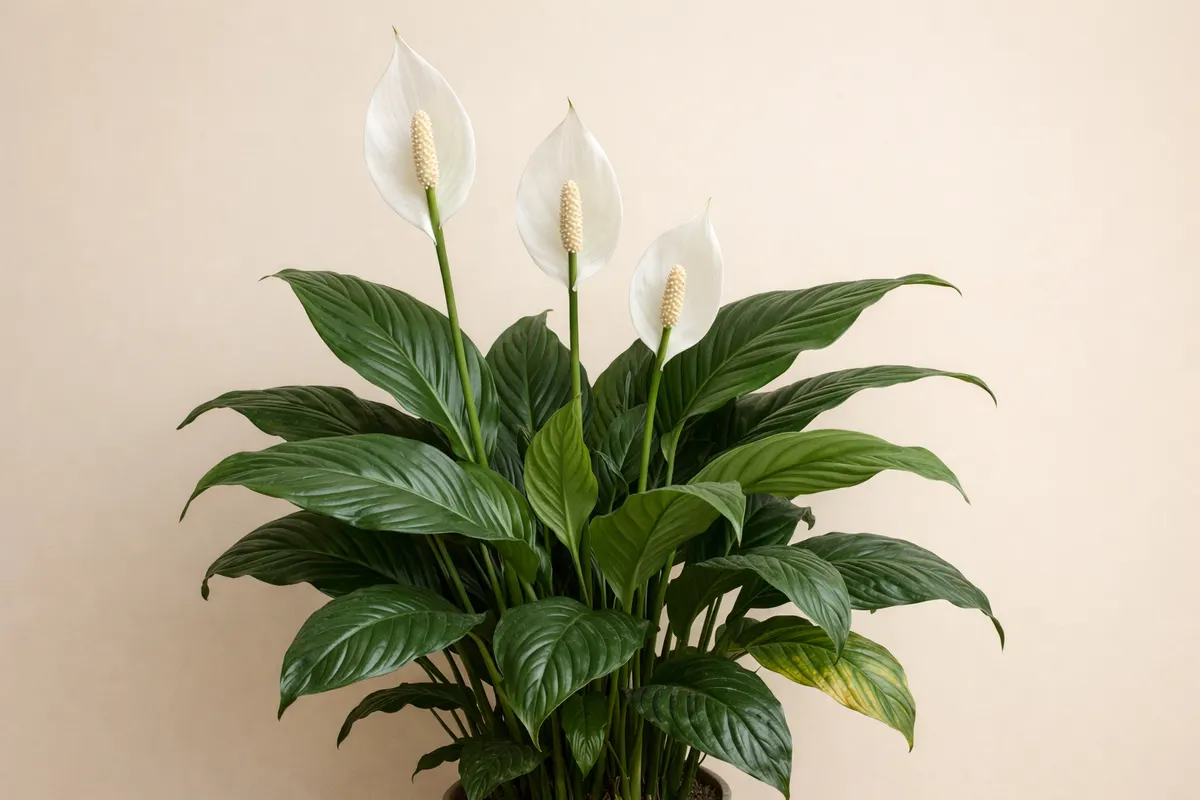
What is a peace lily?
A peace lily is a common houseplant in the genus Spathiphyllum, valued for its glossy green leaves and distinctive white spathes (the cup-like bract) surrounding a central spadix. Most household varieties are hybrids derived from tropical species native to Central and South America and parts of Southeast Asia.
In cultivation, peace lilies are grown for interior foliage and sporadic flowering. Mature plants form clumps of long petioled leaves with a prominent midrib; flowers appear as a white or cream spathe around a cylindrical spadix and can last several weeks. Plants sold as ‘peace lilies’ are usually 1–4 feet tall as potted specimens, though large, established specimens can be taller.
For practical identification and value questions, the common traits—leaf shape, spathe presence, growth habit, and container context—are most useful in photographs. Environmental context (indoor potting, soil, or a shady understory) and condition (healthy gloss vs. brown tips) add real-world clues that a single close-up cannot prove by itself.
How can you tell a peace lily from a photo?
Photo-checkable signs focus on leaf form, spathe structure, and plant habit. Look for glossy, lanceolate leaves with a central midrib and parallel-ish veins, generally 4–12 inches long on upright petioles. Leaves often have a slight arch and a smooth margin without deep lobes.
The most diagnostic floral feature is a white or cream spathe—a modified bract—that curves around a spike-shaped spadix. In photos where a spathe and spadix are visible, note the spathe’s smooth texture and how it wraps the spadix rather than forming an open trumpet like some other plants.
Pay attention to context: indoor pots, low-light settings, and cluster growth of multiple crowns suggest a cultivated Spathiphyllum rather than a wild relative. Photo limitations matter—lighting that flattens color or close crops that hide the petiole base can make identification uncertain.
Peace lily identification often relies on combining leaf and flower clues rather than a single trait. If you have multiple shots — leaf surface, whole-plant habit, and any flower — compare them together before drawing a firm conclusion.
- Leaf clues: glossy, lance-shaped leaves with a prominent central midrib and smooth edges.
- Flower clues: white or cream spathe wrapping a cylindrical spadix; spathe texture is smooth, not papery like some lookalikes.
- Growth habit: clumping crowns from rhizomes, commonly potted indoors in shallow containers.
- Photo tips: include a full-plant shot, a close leaf detail showing veins, and any visible spathe or petiole base.
Peace lily — key facts at a glance
This compact specs table highlights botanical and photo-relevant facts that help confirm a peace lily in images. Use the 'Photo clues' column to match what you see in pictures against typical traits.
Keep in mind that cultivars may vary—variegated or compact cultivars change leaf color and size—so when assessing images note whether variegation or unusual leaf shape is stable across multiple leaves.
| Attribute | Typical | Photo clues |
|---|---|---|
| Scientific name | Spathiphyllum spp. | Look for genus-level flower form (spathe + spadix) |
| Family | Araceae | Spadix-bearing inflorescence in leaf axils |
| Leaf shape | Lanceolate to elliptic | Glossy surface, central midrib, smooth margins |
| Flower | White/cream spathe and spadix | Curved white bract wrapping a narrow spike |
| Mature size | 1–4 ft typical for potted varieties | Clumping crowns and upright leaves in container photos |
| Toxicity note | Contains calcium oxalate crystals | Causes irritation if chewed; not an ID feature but a contextual warning |
Where and when you'll meet a peace lily
Spathiphyllum is a rainforest floor plant. Most of its several dozen species come from the humid understory of Central and South America, with a handful from Southeast Asia and the western Pacific, growing in deep shade on damp ground near streams - which helps explain its tolerance of lower light and sensitivity to strong direct sun. Indoors, provide bright, indirect light; a windowless room needs a suitable grow light. Indoors it is one of the most widely used interior plants there is: reception desks, waiting rooms, hospital corridors, bathrooms and shaded bedroom corners, nearly always in a plastic nursery pot slipped inside a decorative cover.
You will often meet one at an occasion rather than in a season. Peace lilies are the default sympathy and funeral plant in North America and the UK, and a standard supermarket gift plant around Easter and Mother's Day. Shop plants are usually in bloom because growers time flowering for sale, so a newly bought plant may not raise another spathe for a year; a settled houseplant typically flowers in spring and sometimes again in the fall. Outdoors it survives only in frost-free climates, roughly USDA zones 10 to 12, where it is used as a shaded groundcover.
| Setting | Where you'll see it | When | What it usually looks like there |
|---|---|---|---|
| Interior planting | Offices, lobbies, waiting rooms, bathrooms and shaded rooms | Year round, with no dormancy indoors | Clumps of glossy lance-shaped leaves in a nursery pot inside a cover pot, often with browned leaf tips |
| Gift and sympathy plant | Florists, supermarkets, funeral homes and hospital rooms | Year round, concentrated around funerals, Easter and Mother's Day | Freshly flowered plants with several white spathes and a foil or basket wrap |
| In flower | Settled plants in steady, bright indirect light | Mainly spring, sometimes a second flush in fall | Cream-white spathes on stalks held above the leaves, turning green as they age |
| Outdoor planting | Shaded beds in frost-free climates, roughly USDA zones 10 to 12 | Year round where it never freezes | Broad spreading clumps used as understory groundcover beneath trees or on the shaded side of a building |
Plants commonly confused with peace lilies
Several plants share a similar spathe or glossy leaf habit and are commonly mistaken for peace lilies in photos. Close attention to flower structure, leaf attachment, and venation usually separates them.
Below are the top lookalikes and the photo clues that will help you tell them apart without specialized tools.
- Calla lily (Zantedeschia): Has a trumpet-shaped spathe with the flower opening at the edge; leaves are often more arrowhead-shaped and sometimes marked with spots.
- Anthurium (Anthurium andraeanum): Also has a spathe and spadix, but anthurium spathes are often shiny, flat, and come in colors like red or pink; leaves typically have different venation and thicker petioles.
- Aglaonema or Chinese evergreen: Also produces a spathe and spadix, so flower structure alone cannot separate it from a peace lily. Many cultivars have patterned or variegated leaves; compare leaf markings and the whole plant rather than relying on a single flower.
Care and handling for peace lilies
Peace lilies do best in bright, indirect light; direct sun can scorch leaves and overly dark conditions reduce flowering. In photos, brown leaf tips or stretched, pale leaves are signs of light or watering stress.
Water when the top 1–2 inches of potting mix feel dry; these plants prefer consistent moisture but dislike waterlogged roots. Yellowing lower leaves can suggest watering stress. A sour smell from the potting mix may indicate root trouble, but smell and root condition need an in-person check.
For safety and handling, note that peace lilies contain calcium oxalate crystals that can irritate skin and mucous membranes if chewed or crushed. Wear gloves when handling damaged foliage and keep plants out of reach of pets and small children if you suspect ingestion risk.
- Light: bright, indirect; avoid strong midday sun.
- Water: moderate—allow surface to dry slightly between waterings.
- Soil & potting: well-draining mix; repot every 1–2 years if rootbound.
- Pests: watch for spider mites, mealybugs, and scale; check undersides of leaves in photos for telltale residues.
Frequently asked questions
Are peace lilies toxic to cats if my indoor cat chews a leaf?
Peace lilies contain calcium oxalate crystals that can irritate a cat’s mouth, throat, and stomach if chewed. Symptoms may include drooling, pawing at the mouth, vomiting, or difficulty swallowing; severe reactions are uncommon but possible. If you suspect your pet has chewed or swallowed part of the plant, contact your veterinarian or a pet poison helpline promptly for advice; do not wait for symptoms or rely on a photo to judge the risk.
How can I tell if the plant in my photo is a peace lily versus a calla lily?
Compare the flower shape and leaf form: a peace lily’s spathe wraps around a cylindrical spadix and tends to be more cup-like and upright, while a calla lily has a trumpet-shaped spathe that flares at the rim. Calla leaves are often more arrow-shaped and may show spotting. When possible, include a whole-plant image and a close view of the flower in your comparison.
What details in a photo most help estimate a peace lily’s resale value?
Photos that show the whole plant with pot size, multiple leaves for scale, visible rootbound signs, and any variegation or cultivar traits give buyers the clearest sense of value. Healthy, dense foliage and evidence of stable variegation increase interest; visible pests, brown tips, or mushy stems lower reasonable resale expectations.
Can I propagate a peace lily from a photo-identified plant, and what should I check first?
If your photos show multiple crowns separated by rhizomes and healthy roots, the plant is likely a good candidate for division propagation. Before dividing, confirm plant health (no rot or heavy pest load) and ensure at least one crown has vigorous, green leaves. Photos alone can suggest readiness but a hands-on check of roots is the final step.
Related guides
Compare your photo with Leaf Identification: Leafzy
Use the Leaf Identification: Leafzy iOS app to compare photos on your device against the peace lily clues above. Start with full-plant, leaf-detail, and flower shots to match key traits; the app can help surface likely matches and highlight which photo angles are missing. Remember, an app-based first pass is a practical step—not a substitute for hands-on checks or expert appraisal.