Leaf Identification
Snake Plant: Identification, Habitat, and Real Examples
Identify a snake plant from photos: which leaf, growth and variegation cues matter, how to tell common cultivars apart, and where you will find one.
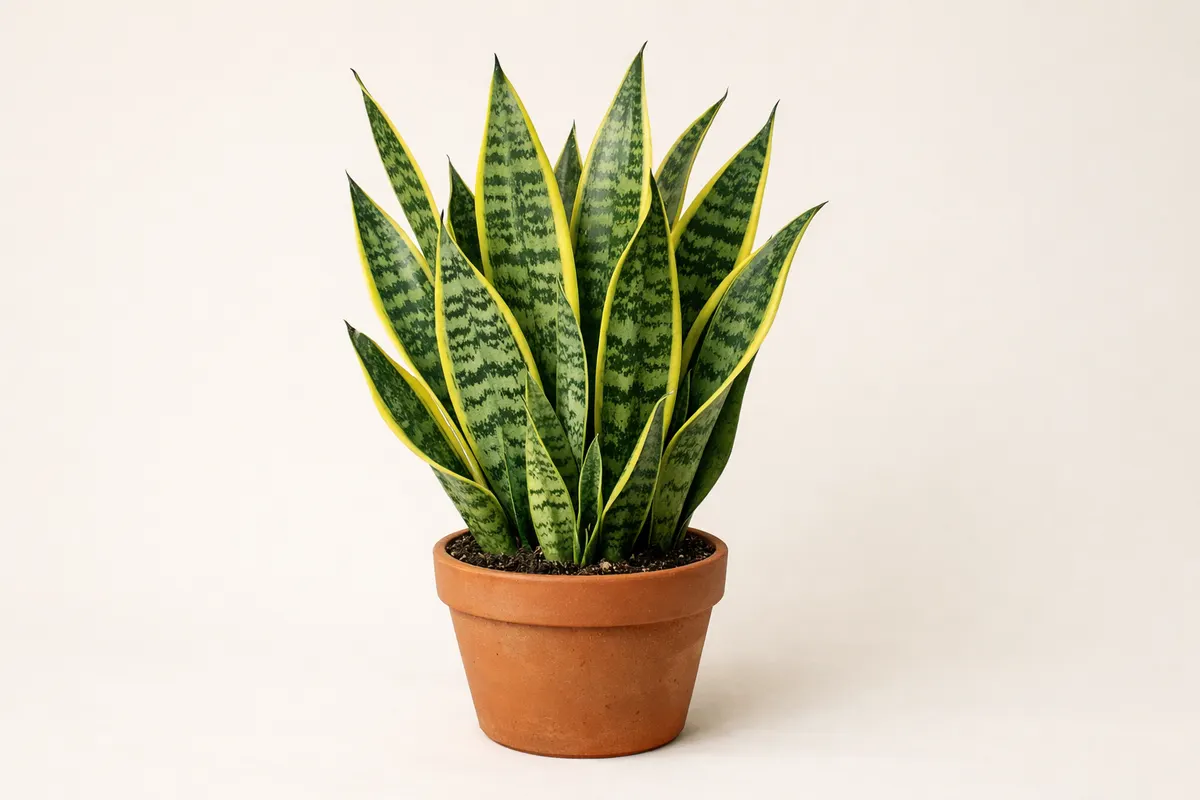
What a snake plant is and where it comes from
A snake plant is the common name for a group of hardy, evergreen, rosette-forming houseplants historically grouped as Sansevieria and now usually classified in the genus Dracaena (for example Dracaena trifasciata). These plants are valued for upright, sword-shaped leaves that can stand vertically for years and for easy indoor culture.
Wild snake plants originate in West Africa and adjacent regions; cultivated forms are bred for leaf color, banding, dwarf habit, or silver tones. Garden and houseplant trade use includes potted ornamentals, floor specimens, and compact cultivars for shelves or desktop displays.
Morphologically, snake plants are characterized by thick, leathery leaves that arise from a short rhizome or basal crown. Leaves may be plain green, banded, edged with yellow, or broadly variegated depending on cultivar and age. Flowers occur rarely indoors and are not necessary to identify most common varieties.
How can you tell a snake plant from a photo?
Photos can show several reliable clues: vertical, swordlike leaves with a stiff, leathery texture; a rosette or clumping pattern with leaves rising from a central crown; and characteristic banding or margin variegation in many cultivars. Good photos capture leaf bases, the whole plant silhouette, and close detail of margins and surface pattern.
Be cautious: lighting and printing can exaggerate variegation and color. A single leaf photograph rarely proves species or cultivar. Look for a combination of traits rather than a single mark: leaf angle, thickness, surface sheen, and the pattern of bands or margins together build confidence.
If the plant has visible offsets (pups) at the crown, that supports a snake plant ID; similarly, a stiff pointed leaf tip and a lack of obvious petiole also help. What a photo usually cannot prove is root structure, sap type, or exact cultivar — those require closer inspection or provenance.
- snake plant identification checklist: upright sword leaves, leathery texture, and vertical banding or yellow margins.
- Photograph these views: full-plant from a few feet, close-up of leaf base, margin and variegation detail, and a side view showing leaf thickness.
- Signs a photo may mislead: heavy image filters, cropped leaf fragments, or pot/trailing plants that hide the crown.
- If you need a second opinion, compare images to reference photos and note pot size and scale so relative leaf dimensions are clear.
Key facts about snake plant
Compact, reference-style facts below summarize the traits often checked from photos and short descriptions. These entries are practical observers’ attributes — not a formal botanical monograph — meant to help you evaluate visible evidence.
Remember that growth habit and leaf details vary across cultivars: a dwarf Hahnii looks very different from a tall Laurentii, though both are called snake plants by growers.
| Attribute | Typical | Why it matters |
|---|---|---|
| Botanical grouping | Dracaena (formerly Sansevieria) | Shows taxonomic context and common synonyms |
| Leaf form | Upright, sword-shaped, 10–120 cm | Distinctive silhouette useful in photos |
| Leaf texture | Thick, leathery, often glossy | Helps separate from thin-leaved lookalikes |
| Variegation | Solid green to banded or edged yellow/cream | Variegation is a key ID and value driver |
| Growth habit | Clumping from rhizome; pups common | Crown and offsets visible in well-composed shots |
| Use | Indoor ornamental, floor specimen, desktop | Explains typical sizes and container photos |
Where you'll encounter snake plants
Snake plants come from the seasonally dry tropics of West and Central Africa, where Dracaena trifasciata grows in rocky, part-shaded ground under scrub - which is why a thick, water-storing leaf shrugs off a month of neglect on a desk. Almost every snake plant you will photograph, though, is indoors: apartments, office lobbies, hotel corridors, waiting rooms and airport planters, usually well back from a window in low or indirect light. That setting is itself a clue. A stiff, upright, sword-leaved rosette thriving in a dim corner where most houseplants would stretch and fade narrows the candidate list quickly.
Outdoors the plant only persists where frost never reaches - roughly USDA zones 9 to 11, so south Florida, the Gulf coast, southern California, Hawaii and similar climates, where it is planted in shaded beds and has in places escaped cultivation to form dense rhizome colonies. Season matters less here than with most plants: retailers stock the common cultivars all year, and indoor specimens hold the same leaves indefinitely rather than dying back. The one event worth waiting for is flowering, an uncommon spike of small, fragrant, greenish-white blooms that mature, pot-bound plants sometimes push out in late winter or spring.
| Setting | Typical location | When you'll see it | What to expect there |
|---|---|---|---|
| Indoor planting | Homes, offices and lobbies, often in a low-light corner | Any month - it does not go dormant indoors | Upright clumps in a small pot, dust on the leaves, pale stretched growth in the darkest spots |
| Retail | Garden centers, big-box stores and grocery plant aisles | Any month - a staple stock item rather than a seasonal one | Uniform nursery pots labeled Laurentii, Zeylanica, Hahnii, Moonshine or simply snake plant |
| Warm-climate outdoors | Shaded beds and borders in USDA zones 9 to 11 | Year round above about 50F; foliage is damaged by frost | Larger, sun-hardened clumps spreading by rhizome, often edging a path or wall |
| In flower (uncommon) | Mature, pot-bound indoor plants and established outdoor clumps | Late winter to spring, and only occasionally | A single tall spike of small greenish-white flowers, strongly scented at night |
types of snake plants commonly mistaken and why
Several other plants or internal cultivar differences can confuse identifications from photos. Within the snake plant group itself there are many forms — compact Hahnii, tall Laurentii, silver-toned 'Moonshine' — and subtle leaf shapes that change how a specimen reads in an image.
Outside the group, agaves or yuccas sometimes get mistaken for tall snake plants when only leaf tips are visible. Key photographic differences are leaf cross-section (agaves often much thicker and succulent), strong fibrous margins on agaves, and distinctive rosette geometry compared with clumping snake plants.
Other houseplants like some dracaena species or young ornamental yuccas may share upright leaves but differ in petiole, branching, or leaf arrangement; capturing the crown and basal offset pattern in photos helps separate these lookalikes.
- Snake plant vs agave: agave leaves typically wider at the base, sometimes with terminal spines and fibrous margins.
- Snake plant vs yucca: yucca often branches and has more fibrous leaf bases; snake leaves emerge in tight crowns.
- Within-group variation: Hahnii (bird’s nest form) appears squat; Laurentii shows yellow margins; Moonshine has a pale silvery surface.
Care and handling
Care affects how a plant looks in photos: overwatered leaves can appear limp and discolored, while sun-scorched leaves show brown patches. For healthy presentation, allow soil to dry between waterings, use bright indirect light for variegated cultivars, and avoid direct hot sun for pale varieties.
When preparing photos for identification or sale, gently wipe leaves to remove dust, show the crown and any pups, and include a common object for scale. If you’re shipping or moving a specimen, tighten soil around roots and pad pot edges to reduce crown damage.
- Water: infrequent; let top few centimeters dry.
- Light: low to bright indirect—variegated types need brighter light to keep color.
- Propagation: division of rhizome or pups; leaf cuttings work but may not retain variegation.
Frequently asked questions
Can a single photo confirm a snake plant's identity when I need to be sure?
A single photo can show strong clues but rarely proves identity with 100% certainty. Best photos include the whole plant, a clear view of the crown and leaf bases, close-ups of variegation and margins, and a side view of leaf thickness. Use multiple angles and note pot scale; when in doubt, request a photo of the root crown or a brief video of offsets.
Which snake plant varieties should I mention when listing mine for sale?
When listing, name any recognizable cultivar (for example Laurentii, Hahnii, Zeylanica, or Moonshine) if you know it, and describe variegation, height, pot size, and whether the plant was propagated from a known parent. If unsure of the cultivar, describe visible traits clearly rather than guessing — buyers value accurate, verifiable details over speculative names.
How can I tell a real variegated snake plant from one that was artificially painted or bleached?
Natural variegation follows leaf veins and shows gradual color transitions; painted leaves often have surface streaks, flaking, or uniform paint texture. Check the underside of the leaf and the base where new leaves emerge—paint rarely reaches those areas naturally. Also watch for consistent new growth that matches the variegation pattern; natural variegation will appear on newly emerged leaves.
Are any snake plants consistently rare or significantly more valuable to collectors?
Yes, certain stable and unusual variegations or named cultivars can command premium prices among collectors. Value depends on demonstrated stable traits, rarity in supply, and plant health. Expect higher prices for verified, well-documented specimens and for compact rare clones; however, prices vary by region and platform, so treat reported figures as typical market observations, not appraisals.
Related guides
Compare your plant with Leaf Identification: Leafzy
Open the Leaf Identification: Leafzy app on your phone to compare a photo of your plant against the visual clues on this page. Capture several angles—full plant, crown, leaf margin, and close-up of variegation—so the app and any follow-up checks have the best evidence. Use the app as a first pass and follow the verification steps here before making decisions about identity or value.