
Golden pothos — unsafe for cats
Choosing indoor plants safe for cats? This golden pothos example shows why a familiar houseplant needs a separate toxicity check before it enters a cat’s space.
Identification summary
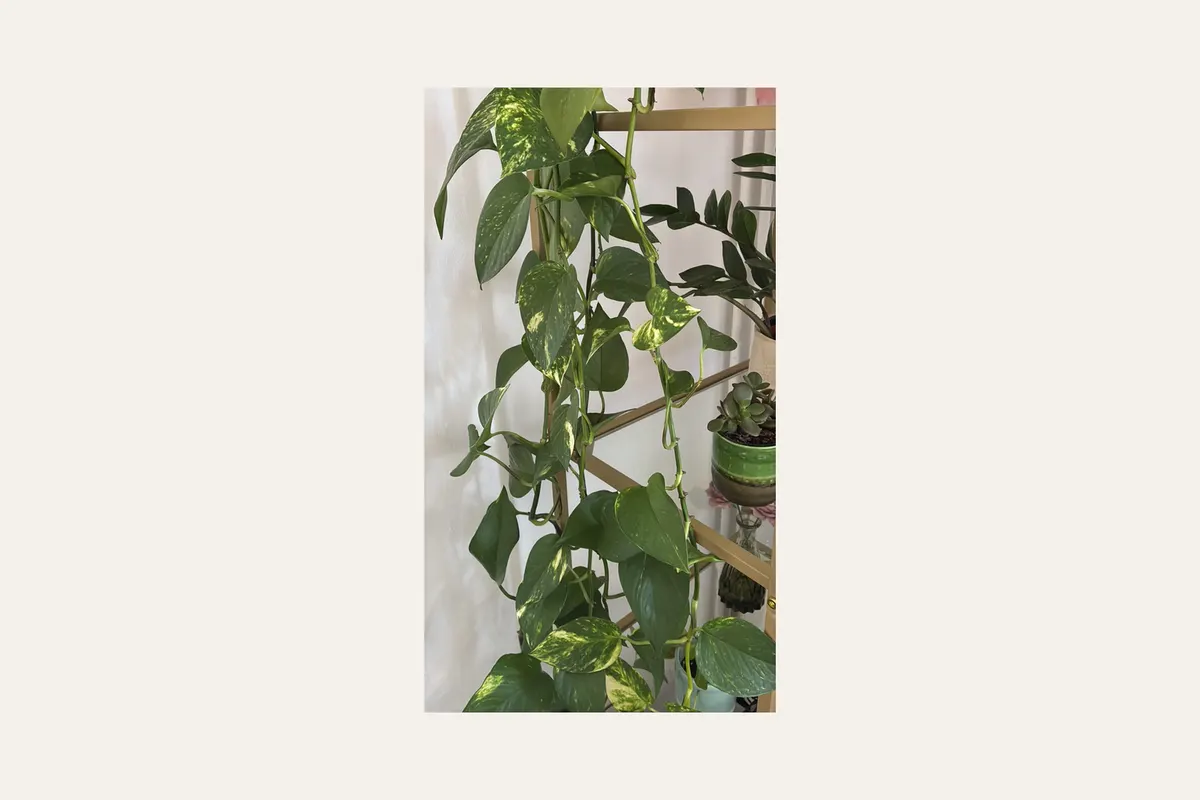
When choosing indoor plants safe for cats, do not include golden pothos. The photographed vine has green and yellow, heart-shaped leaves consistent with golden pothos (Epipremnum aureum), the name suggested by the scan. The ASPCA lists golden pothos as toxic to cats and dogs (https://www.aspca.org/pet-care/aspca-poison-control/toxic-and-non-toxic-plants/golden-pothos). This photograph illustrates a plant to exclude from a cat-accessible collection.
The image shows trailing stems, individual leaf stalks, and irregular yellow variegation. It is useful for comparing visible features, but it cannot prove every plant in the room is the same species. The small neighboring plants are separate identification questions and should not inherit the pothos label.
Plant identification and pet-health assessment are different tasks. A photo suggestion can help you research the plant name. It cannot tell whether a cat has chewed the plant, how much was swallowed, or whether symptoms need treatment. If exposure is suspected, contact your veterinarian promptly with the plant name and photograph.
Evidence
| Visible features | Trailing stems and yellow-green heart-shaped leaves |
|---|---|
| Tentative plant identification | Golden pothos (Epipremnum aureum) |
| Cat safety | Toxic; keep out of cat-accessible areas |
| Exposure assessment | Not determined from a photograph |
Historical context
Match the scientific name as well as the shop label. Common names are reused and retail tags can be incomplete. Photograph a whole leaf, its attachment to the stem, and the growth habit. Compare more than one leaf because light, age, and cultivar affect color and markings.
For this vine, the pointed, heart-shaped leaves and yellow-green pattern support the pothos suggestion. Those features do not indicate pet safety: an attractive or familiar houseplant can still be toxic. A different pothos color pattern should not be treated as a safe alternative merely because the leaves look different.
A verified alternative to investigate is parlor palm (Chamaedorea elegans), which the ASPCA lists as non-toxic to cats (https://www.aspca.org/pet-care/aspca-poison-control/toxic-and-non-toxic-plants/parlor-palm). Check the exact species before purchase. “Palm” alone is not a safety classification; unrelated plants can share that common-name word.
The long stems in this photograph make access relevant. Moving a trailing plant to a higher shelf may still leave leaves within reach, and cats may climb. Use an area the cat cannot enter or replace the plant with an accurately identified non-toxic option. Do not assume a hanging basket alone prevents access.
Keep a photograph and the original plant label available for a veterinary consultation. Report what you observed and approximately when, rather than relying on an app to infer exposure. Do not attempt home treatments or wait for an identification score before seeking advice about a possible ingestion.
Even a plant listed as non-toxic is not intended as pet food, and potting products or fertilizers require their own precautions. The practical decision is to choose a correctly named plant, verify its toxicity status, and manage access. The pothos in this example fails that toxicity check for a cat-accessible room.
This pothos is an unsafe-plant example
When choosing indoor plants safe for cats, do not include golden pothos. The photographed vine has green and yellow, heart-shaped leaves consistent with golden pothos (Epipremnum aureum), the name suggested by the scan. The ASPCA lists golden pothos as toxic to cats and dogs (https://www.aspca.org/pet-care/aspca-poison-control/toxic-and-non-toxic-plants/golden-pothos). This photograph illustrates a plant to exclude from a cat-accessible collection.
The image shows trailing stems, individual leaf stalks, and irregular yellow variegation. It is useful for comparing visible features, but it cannot prove every plant in the room is the same species. The small neighboring plants are separate identification questions and should not inherit the pothos label.
Plant identification and pet-health assessment are different tasks. A photo suggestion can help you research the plant name. It cannot tell whether a cat has chewed the plant, how much was swallowed, or whether symptoms need treatment. If exposure is suspected, contact your veterinarian promptly with the plant name and photograph.
What to verify before choosing a houseplant
Match the scientific name as well as the shop label. Common names are reused and retail tags can be incomplete. Photograph a whole leaf, its attachment to the stem, and the growth habit. Compare more than one leaf because light, age, and cultivar affect color and markings.
For this vine, the pointed, heart-shaped leaves and yellow-green pattern support the pothos suggestion. Those features do not indicate pet safety: an attractive or familiar houseplant can still be toxic. A different pothos color pattern should not be treated as a safe alternative merely because the leaves look different.
A verified alternative to investigate is parlor palm (Chamaedorea elegans), which the ASPCA lists as non-toxic to cats (https://www.aspca.org/pet-care/aspca-poison-control/toxic-and-non-toxic-plants/parlor-palm). Check the exact species before purchase. “Palm” alone is not a safety classification; unrelated plants can share that common-name word.
- Identify each plant separately, including neighboring pots.
- Check the scientific name against a veterinary toxicity reference.
- Keep golden pothos out of cat-accessible areas.
Apply the result to the room, not just the label
The long stems in this photograph make access relevant. Moving a trailing plant to a higher shelf may still leave leaves within reach, and cats may climb. Use an area the cat cannot enter or replace the plant with an accurately identified non-toxic option. Do not assume a hanging basket alone prevents access.
Keep a photograph and the original plant label available for a veterinary consultation. Report what you observed and approximately when, rather than relying on an app to infer exposure. Do not attempt home treatments or wait for an identification score before seeking advice about a possible ingestion.
Even a plant listed as non-toxic is not intended as pet food, and potting products or fertilizers require their own precautions. The practical decision is to choose a correctly named plant, verify its toxicity status, and manage access. The pothos in this example fails that toxicity check for a cat-accessible room.
More Poisonous Plant Identification identifications
Related guides
Identify the plant, then verify its toxicity
Use Leafzy (https://leafidentification.app/) for a first-pass plant-identification suggestion. Verify the suggested scientific name in a veterinary toxicity reference. For suspected ingestion, contact your veterinarian directly.
Take the next step →Frequently asked questions
Is the pothos in this photograph safe for cats?
Golden pothos is toxic to cats. Treat this as an unsafe-plant example, not a recommended cat-safe houseplant.
Is parlor palm a possible alternative?
ASPCA lists Chamaedorea elegans as non-toxic to cats. Verify that exact botanical name rather than relying on the word palm.
Can a plant-identification app assess an ingestion?
No. Contact a veterinarian about a suspected exposure and provide the plant name, photo, and what you observed.